
Transaction Simulation in Rabby: What a Chrome Wallet Can—and Cannot—Protect You From
A common misconception about wallet security is that a transaction is safe when the wallet displays a familiar token name, a recognised protocol, or a reassuring green warning. That is not how DeFi risk works. The decisive question is what the smart contract will actually change: which assets leave the account, which permissions are granted, and which network receives the call.
Rabby approaches this problem by making transaction simulation a central part of the signing process. Before approval, the wallet attempts to show the expected changes to token balances and to flag known hazards such as phishing, compromised contracts, suspicious addresses, and unlimited token approvals. For users in Germany and elsewhere in the EVM ecosystem, this creates a useful comparison with more conventional browser wallets, including MetaMask. Yet simulation is not a guarantee. It is better understood as a pre-flight instrument—valuable, sometimes decisive, but dependent on the quality of the information available to it.
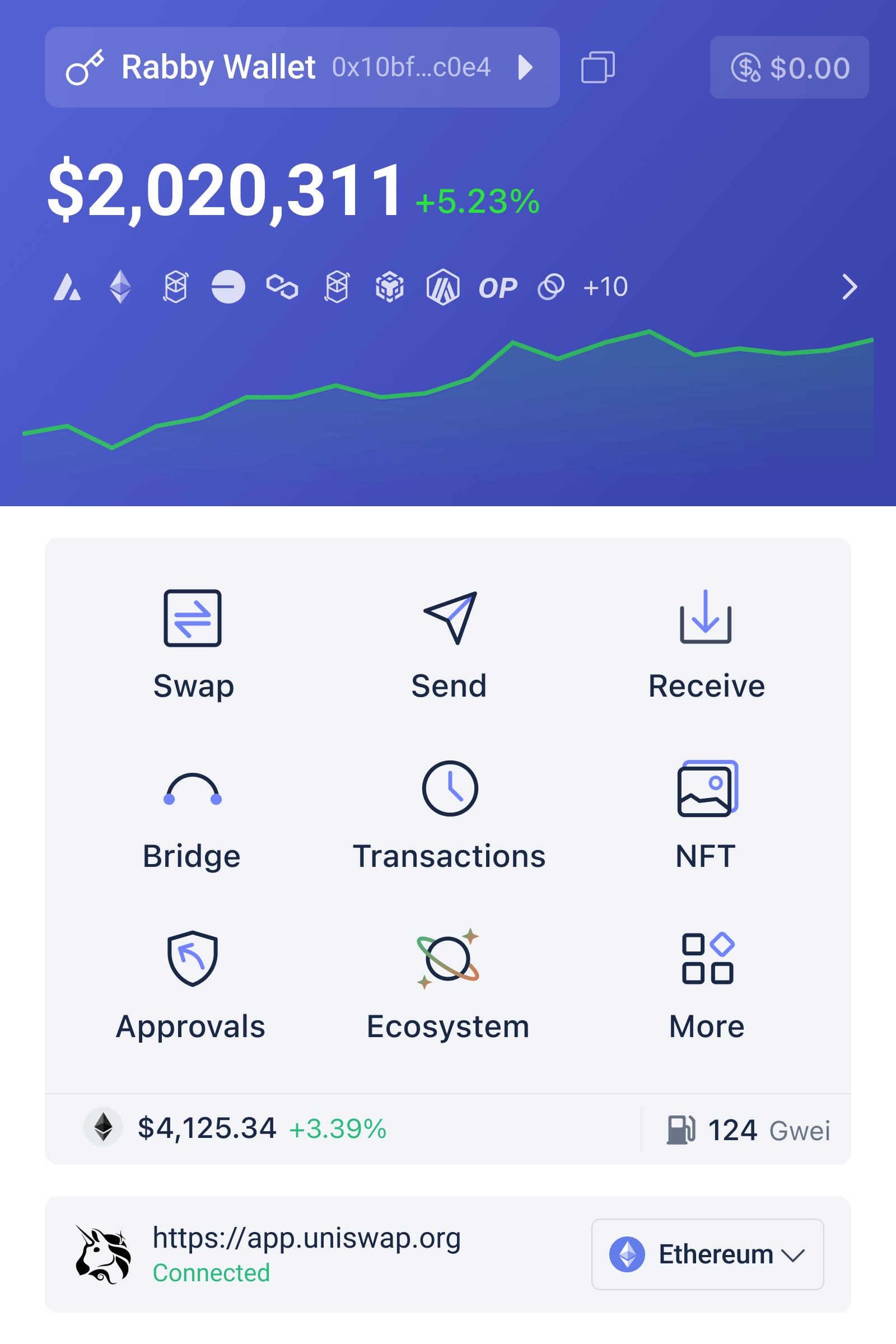
Rabby and MetaMask: Similar Foundations, Different Risk Workflow
Rabby and MetaMask belong to the same broad category: non-custodial wallets that allow users to control blockchain accounts and sign transactions through a browser interface. In a non-custodial design, private keys remain under the user’s control rather than being deposited with an exchange or wallet operator. Rabby states that keys are stored locally on the user’s device and are not transmitted to Rabby servers. That is an important custody boundary, but it does not remove the need for careful endpoint security. A compromised computer, malicious browser extension, exposed seed phrase, or fraudulent recovery prompt can still undermine the account.
The practical difference is less about whether Rabby can sign a transaction and more about how much context it presents before signing. Rabby positions itself as a direct alternative to MetaMask with a strong emphasis on multi-chain DeFi usability, automatic network switching, transaction simulation, and expanded security warnings. MetaMask remains widely used and supports many common EVM workflows, but users often rely more heavily on the application interface and their own interpretation of the signing request. The comparison is therefore a comparison of risk workflows, not a simple claim that one wallet makes a blockchain transaction safe.
Rabby’s multi-chain orientation is significant because chain confusion is an operational risk. The wallet supports more than 140 EVM-compatible networks, including Ethereum, Polygon, Arbitrum, Optimism, Avalanche, Base, and BNB Chain. Automatic network switching can reduce the chance that a user manually selects the wrong network when connecting to a decentralised application. At the same time, convenience can make users less attentive. A transaction may be correctly routed to the requested chain and still interact with a malicious contract. Removing one source of error does not remove the others.
For a German DeFi user moving between Ethereum mainnet, Layer 2 networks, and newer EVM chains, this distinction matters. Network selection, token representation, bridge routes, and contract permissions can all change at once. A wallet that consolidates these details can improve comprehension, provided the user pauses to inspect the details instead of treating automation as authorisation.
How Transaction Simulation Works as a Security Layer
A blockchain transaction normally contains an intended destination contract, encoded function data, value, gas parameters, and the signing account. The wallet does not necessarily know the user’s economic intention from this raw data. “Approve,” for example, can mean granting a token allowance to a decentralised exchange, a lending protocol, or a hostile contract. Simulation adds an intermediate step: the proposed call is evaluated against an available representation of the current blockchain state, and the wallet estimates what balances and permissions would change if the call were executed.
This produces a more useful mental model than a generic “sign transaction” prompt. Instead of asking only, “Do I recognise this website?”, the user can ask, “Does the expected result match what I intended?” If the user is swapping a stablecoin for ETH, a simulated result that shows a different token leaving the wallet, an unexpected asset appearing, or a large approval being granted should stop the process. The value lies in comparing intention with effect.
Rabby also includes a security engine that checks contracts and addresses for signals associated with phishing, known exploits, and potentially dangerous approvals. These warnings are complementary to simulation. A scanner may identify a known bad address; simulation may reveal the economic consequence of an otherwise unfamiliar call. Neither system has perfect knowledge. A newly deployed contract may not yet have a public incident history, while a technically valid transaction can still be economically harmful because of slippage, oracle assumptions, or a user’s misunderstanding.
The distinction between simulation and detection is easy to miss. Detection asks whether available signals resemble known risk patterns. Simulation asks what the proposed transaction appears likely to do under a particular state. A transaction can pass one test and fail the other. This is why a clear simulation should be treated as evidence about expected execution, not as a cryptographic certificate of legitimacy.
Where the Model Breaks Down
Simulation is inherently conditional. It is based on a state that may change before the transaction is mined. Prices can move, liquidity can disappear, block conditions can change, and another transaction can alter the contract’s state first. On congested networks, the difference between simulation and execution may be small; in fast-moving markets or adversarial settings, it can matter materially.
Contract behaviour can also depend on information that is difficult to model perfectly. Some protocols use external data feeds, time conditions, block-related variables, or interactions with other contracts. A malicious application might present a benign result under one set of conditions and behave differently when a specific account, block, or market condition appears. This does not make simulation useless. It defines its boundary: the result describes an expected path, not every possible path through a contract.
Bridges deserve particular caution. Rabby integrates bridge routes through services such as LI.FI, allowing users to move assets across networks within the wallet interface. This can simplify a complex workflow, but a bridge transaction may involve several contracts, an intermediary route, destination-chain execution, and different forms of asset representation. A simulation on the source chain cannot by itself eliminate all destination-chain, liquidity, or bridge-provider risk. Users should check the final asset, destination network, fees, and route before approving.
The same principle applies to the integrated swap aggregator, which can compare routes involving decentralised exchanges such as Uniswap and 1inch. A better quoted rate is not automatically a safer trade. Slippage settings, approval scope, route complexity, and the identity of the contracts involved remain relevant. Aggregation improves price discovery and convenience; it does not convert market execution into a risk-free service.
Backend Independence and the Browser Attack Surface
One of Rabby’s important architectural claims is that it does not create or alter transactions on behalf of the user. Its central signing functions can remain usable offline if Rabby’s servers are unavailable. This separation is reassuring because the private key and the final signature remain on the user’s side of the custody boundary. It also clarifies what a wallet provider can and cannot do: the provider may supply interface features, warnings, or simulation data, but the user ultimately authorises the signed message.
However, backend independence should not be confused with complete independence from external infrastructure. A useful simulation requires blockchain state, usually obtained through network connections or RPC infrastructure. Security warnings may depend on intelligence services and updated databases. The wallet may function in a reduced mode during an outage, while simulations or risk labels become unavailable or less informative. The correct operational response is not to sign blindly; it is to delay, verify through an independent channel, or use a hardware wallet and a separately checked transaction flow.
The Chrome extension itself is another attack surface. Users should install software only from a source they have independently verified, inspect the extension publisher, keep the browser and operating system updated, and never enter a seed phrase into a website or support form. Open-source software, released under the MIT licence, allows community review of the code, but open source does not mean that every user has audited every release or that the distribution channel cannot be imitated. Code transparency is a valuable control, not a substitute for installation discipline.
For readers evaluating the rabby wallet extension, the decision should therefore be framed as a layered-security choice. The extension can improve transaction legibility, while a hardware wallet such as Ledger, Trezor, or OneKey can add a separate signing boundary. The combination is stronger than either control alone, but it still depends on checking the physical device display, protecting the recovery phrase, and verifying that the intended account is selected.
A Practical Decision Framework for DeFi Users
A reusable rule is to inspect every transaction at three levels. First, verify the context: the correct website, account, chain, and contract address. Second, verify the effect: which assets decrease, which assets increase, and which allowances or permissions are created. Third, verify the consequence: whether the action exposes the wallet to future spending, a bridge dependency, a volatile price, or a protocol whose assumptions you have not assessed.
This framework is especially useful when a transaction looks routine. Token approvals are a classic example. The immediate action may show no asset leaving the wallet, yet an unlimited approval can allow a contract to spend tokens later if the contract is compromised or malicious. Rabby’s warnings about infinite approvals can make this hidden liability more visible. The user must still decide whether the approval is necessary and whether it should be limited.
Features that reduce friction require the same discipline. A Gas Account can allow network fees to be paid with stablecoins such as USDC when the user lacks the native token of a chain. That solves a genuine usability problem, particularly across multiple networks. But it can also conceal the fact that a fee conversion or service route is taking place. Before confirming, users should review the fee asset, the amount, and the network on which the transaction is executed.
Rabby Points, earned through activities such as swaps, gas top-ups, or referrals, are a loyalty feature rather than a security mechanism. They should not influence whether a user signs a transaction. Incentives can subtly encourage more activity, while security usually improves when activity is deliberate and constrained. Separating convenience rewards from risk assessment is a small but useful behavioural safeguard.
What to Watch as Multi-Chain Wallets Mature
Recent Rabby messaging presents the wallet as a general interface for Ethereum and EVM networks, with Chrome and other browser support alongside desktop and mobile applications. The broader direction is clear: wallets are becoming transaction interpreters, route selectors, fee managers, and security dashboards rather than simple key containers. If this trend continues, the quality of explanation shown before signing may become as important as the number of networks supported.
The open question is whether simulation and warning systems can keep pace with increasingly composable DeFi transactions. A useful future improvement would not merely display more data, but explain uncertainty: which result is highly reliable, which depends on changing market conditions, and which downstream action cannot be fully assessed from the current chain state. Until that standard exists, users should treat simulation as a strong reason to stop and investigate when something looks wrong—not as permission to stop thinking when everything looks normal.
Frequently Asked Questions
Does Rabby transaction simulation guarantee that a transaction is safe?
No. It estimates the expected result and can expose suspicious balance changes, approvals, or contract behaviour before signing. The estimate depends on available blockchain state and may not capture future state changes, novel attacks, bridge risks, or every possible contract path. It is a decision aid, not an insurance policy.
Is Rabby safer than MetaMask by default?
That conclusion is too broad. Rabby’s simulation, multi-chain presentation, and security warnings may provide a more informative workflow for many DeFi users, especially those moving across numerous EVM networks. Safety still depends on the user’s device, installation source, recovery-phrase protection, contract verification, and signing behaviour. A careful MetaMask user can be safer than a careless Rabby user.
Why combine Rabby with a hardware wallet?
The browser extension can help interpret the transaction, while the hardware wallet keeps key operations in a separate signing environment. This creates layered protection against some browser and computer threats. It does not make a malicious transaction harmless, so the transaction details and destination should still be checked before approval.
The most useful way to judge a multi-chain wallet is not to ask whether it removes risk. No interface can do that. Ask instead whether it makes the intended effect easier to verify, separates custody from convenience, and gives you a clear reason to pause when the transaction does not match your plan. That is the real promise of transaction simulation—and its proper limit.
